
Understanding Asthma

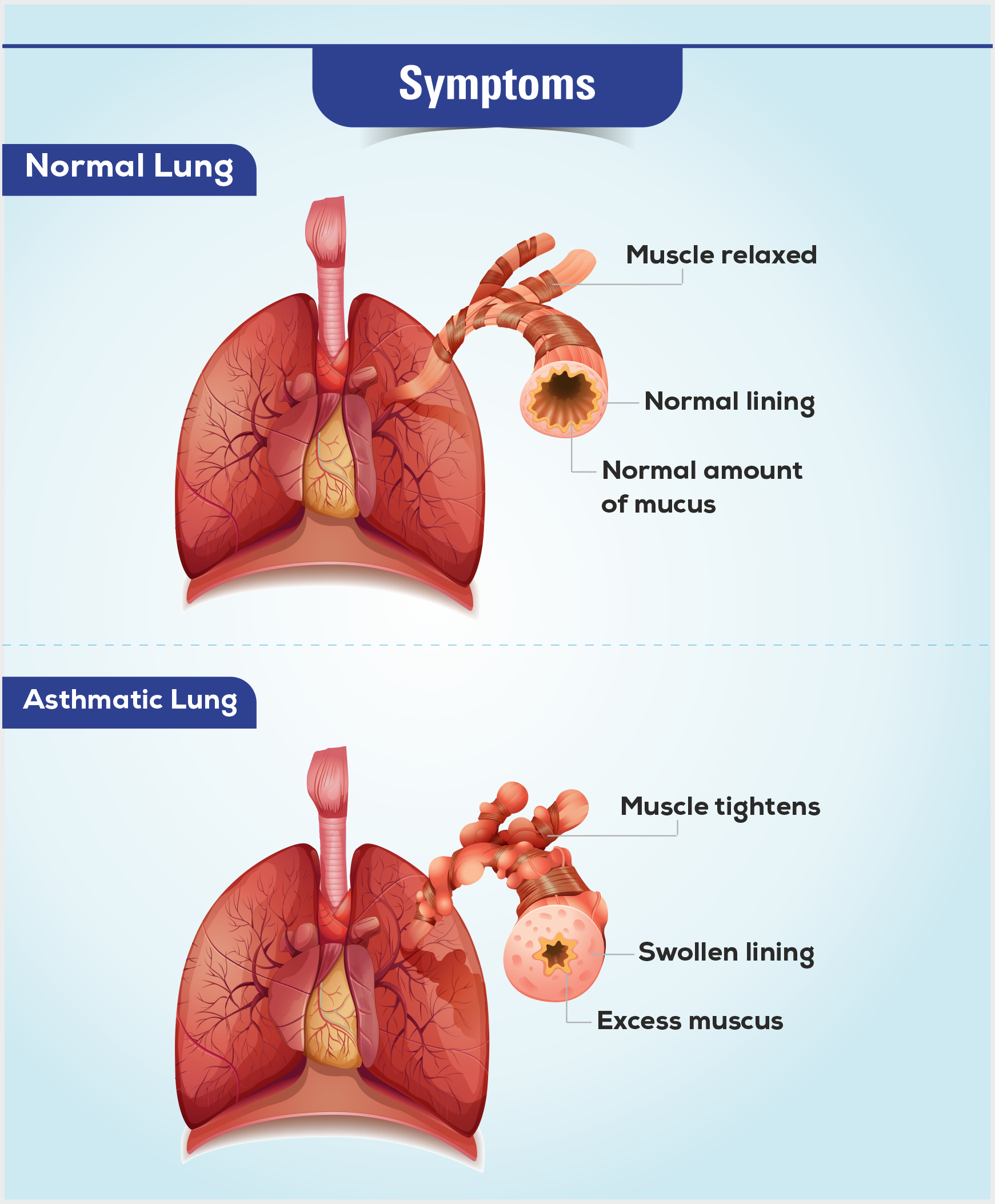
Asthma is a chronic respiratory condition that affects millions of people worldwide, including a significant population in India. It’s a condition where your airways narrow, swell, and may produce extra mucus, making breathing difficult.

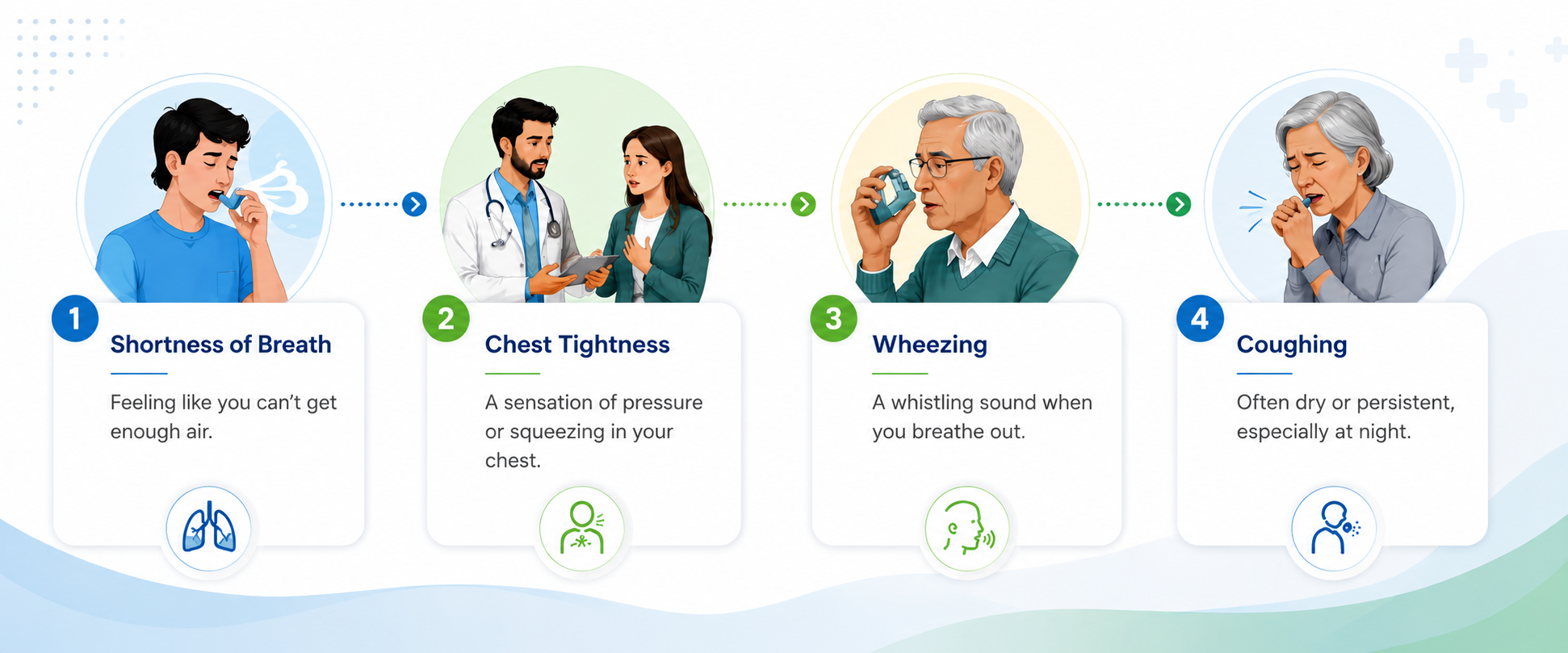
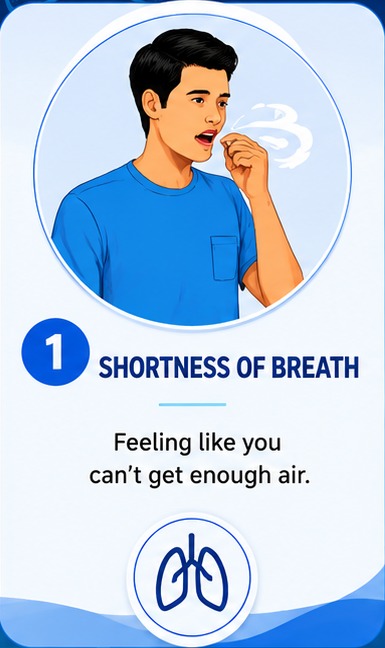
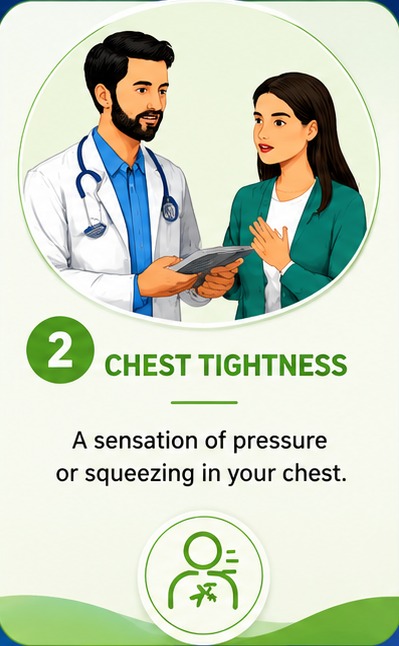
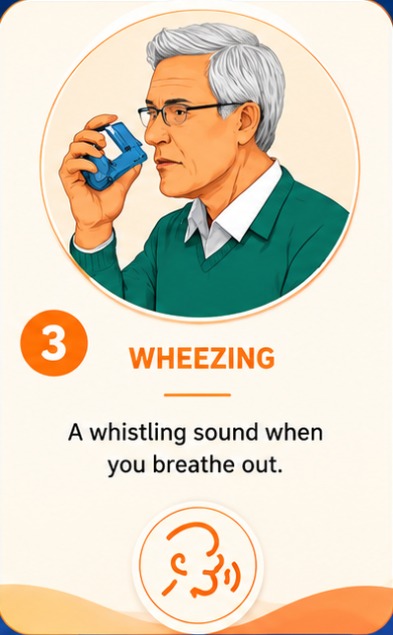
Asthma is a chronic inflammatory disease of the airways that causes recurrent episodes of wheezing, breathlessness, chest tightness, and coughing, particularly at night or in the early morning.
These symptoms are often associated with widespread, but variable, airflow obstruction within the lung that is often reversible either spontaneously or with treatment.

Symptoms & Diagnosis

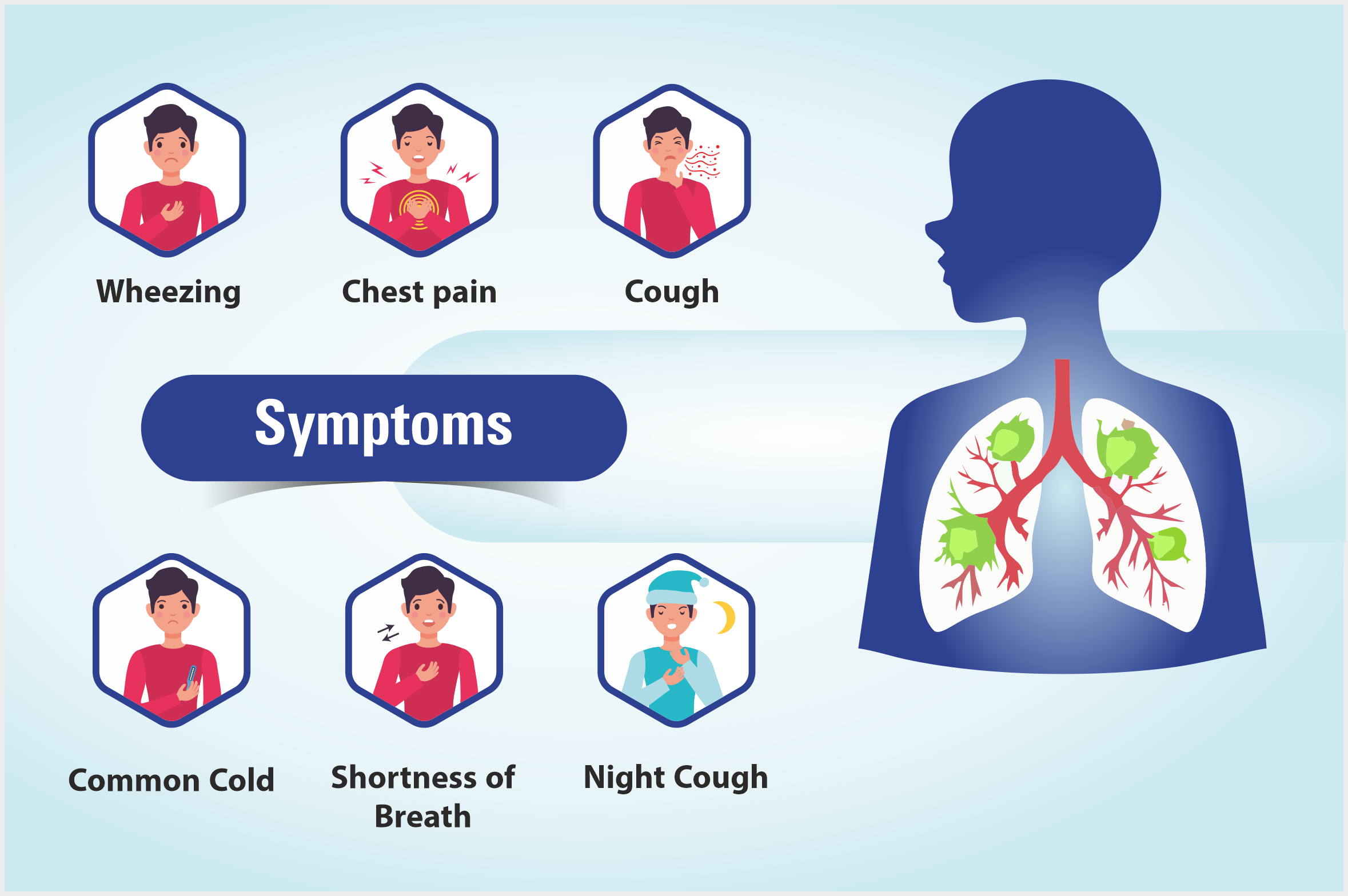
Asthma symptoms can vary from personaaa to person but commonly include:

  1. Wheezing (a whistling sound while breathing)
  2. Shortness of breath
  3. Chest tightness
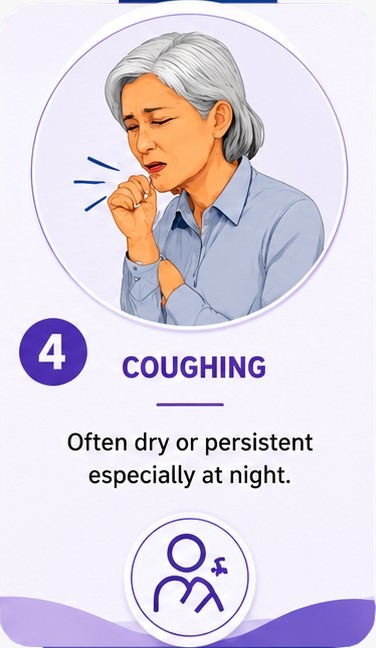
  4. Persistent cough, especially at night or early morning
Early warning signs may include frequent coughing, mild breathlessness during activity, or disturbed sleep. Recognizing these early can help prevent worsening.
Know What's Causing Discomfort

How Asthma affect you

Recognizing sings early and understanding asthma symptoms is key to effective treatment and better everyday breathing

How Asthma Affects You – Step by Step

How Asthma Affects You – Step by Step

How Asthma Affects You – Step by Step

Diagnosis of Asthma

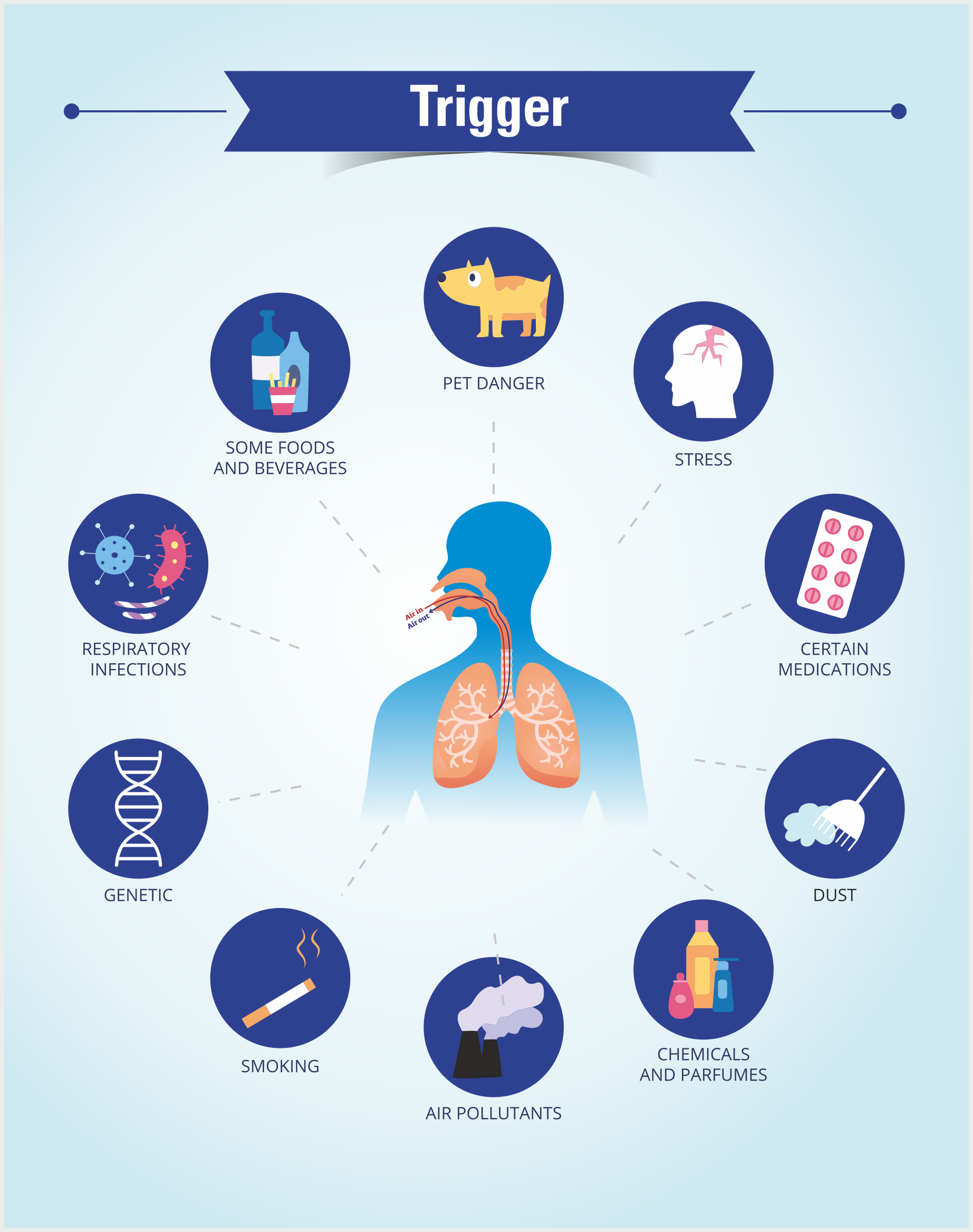
Asthma symptoms are often triggered by environmental factors. In Iraq, common triggers include:

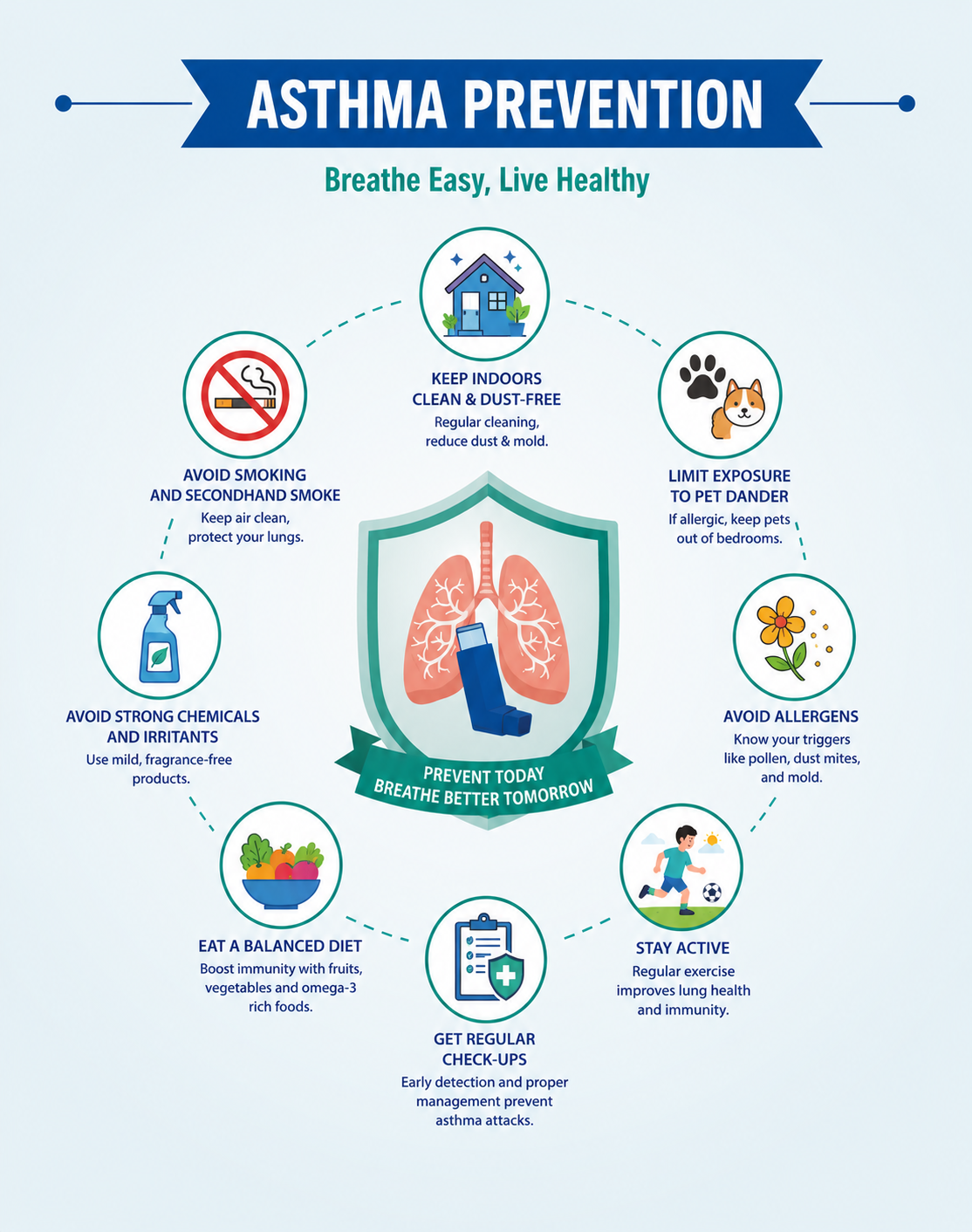
Avoid your triggers

Stay away from smoke, dust, pollen, mold, pet dander, strong smells, and cold air. Check daily air quality before going out.

Take meds daily

Use your controller inhaler every day, even when you feel fine. Keep your rescue inhaler with you always.

Follow your Asthma Action Plan

Work with your doctor to make one. It tells you what to do daily and during an attack.

Keep your home clean

Use allergen-proof covers, wash bedding weekly in hot water, run a HEPA filter, and keep humidity at 30-50%.

Stay healthy

Aim for a healthy weight, eat more fruits & veggies, exercise safely, quit smoking/vaping, and manage stress.

Prevent infections

Wash hands often and ask your doctor about flu and pneumonia vaccines.

Triggers & Prevention

Asthma symptoms are often triggered by environmental factors. In Iraq, common triggers include:

Triggers & Prevention

Asthma symptoms are often triggered by environmental factors. In Iraq, common triggers include:
Allergens
Pollen, dust mites, pet dander (from animals like cats, dogs), mold spores, cockroach droppings.
Irritants
Tobacco smoke (firsthand and secondhand), air pollution (smog, vehicle exhaust, industrial emissions), droppings, certain food or chemicals, strong odors (perfumes, cleaning products), chemical fumes, cold and dry air.
Respiratory infections
Colds, flu, bronchitis, sinusitis.
Physical activity
Exercise-induced bronchoconstriction (EIB) can occur in some individuals.
Weather changes
Cold air, high humidity, thunderstorms.
Strong emotions
Stress, crying, laughing, shouting can trigger symptoms in some people.
Certain medications
Beta-blockers, aspirin, and other non-steroidal anti-inflammatory drugs (NSAIDs) can trigger asthma in some sensitive individuals.
Gastroesophageal Reflux Disease (GERD)
Acid reflux can sometimes worsen asthma symptoms.

Home care tips


We Always Work With The Highest Responsibility

Home care
Regular cleaning to reduce dust
Use proper ventilation
Wash bedding frequently
Prevention checklist
Take prescribed medicines regularly
Avoid known triggers
Monitor symptoms
Keep rescue inhaler handy

Living with Asthma & Support

Daily management tips Exercise & lifestyle Work / school management
  1. Take medications as prescribed
  2. Monitor symptoms regularly
  3. Avoid triggers
  1. Stay active with proper precautions
  2. Warm up before exercise
  3. Maintain a healthy lifestyle
  1. Inform teachers or employers
  2. Keep inhaler accessible